Education finds its deepest meaning when children are able to connect what they learn with the world they live in.
A concept becomes more than a lesson when it can be experienced, questioned, applied and understood in a real-life context. At Angels Valley School, we believe that learning should therefore extend beyond the four walls of the classroom. The classroom is where curiosity is sparked, concepts are introduced and knowledge is built; the world outside is where that knowledge finds context, purpose and meaning.
After all, the real world does not come neatly divided into subjects and chapters. It requires us to think critically, communicate, collaborate, solve problems, make decisions and adapt. Our endeavour, therefore, is to continually connect what children learn in their curriculum with what the world outside the classroom actually looks like.
Consider financial literacy. Students learn about saving, investment, stocks, mutual funds and compounding in a classroom, but these concepts acquire an entirely different meaning when encountered in the real world.
Our students undertook a week-long internship with an investment firm in Rajpura, where they explored these concepts in a professional setting and understood why financial awareness and informed decision-making matter.
The learning moved from knowing to understanding.
Our approach to environmental education follows the same philosophy.
Climate change and the Sustainable Development Goals can easily remain abstract concepts when they exist only in textbooks.
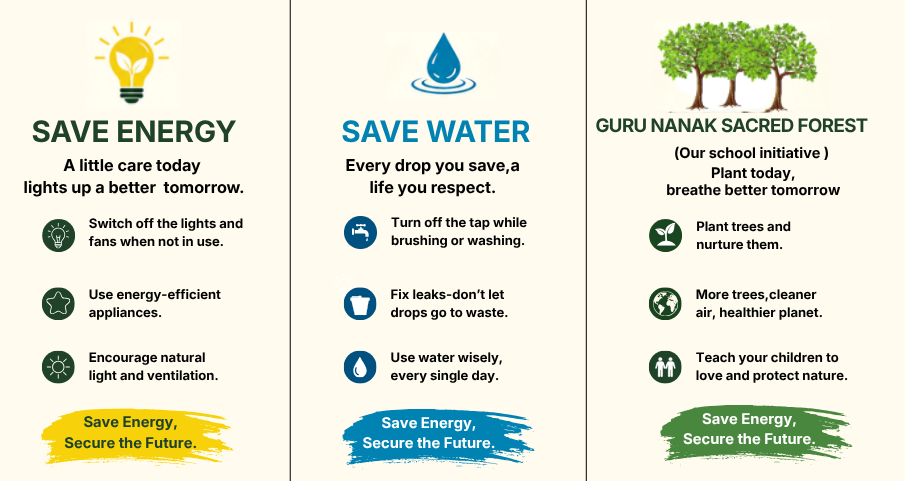
Angels Valley School, our students have helped create a Guru Nanak Sacred Forest in partnership with EcoSikh, comprising 11,000 plants belonging to 53 indigenous and native species of Punjab. We fondly call it the “lungs of Rajpura.” The forest is not merely a plantation initiative; it is a living classroom.
Perhaps its impact is best understood through a small incident.
During an episode of extreme summer heat towards the end of May, our students found a dead bird on the campus.
While we cannot establish with certainty what caused its death, eeing a bird lying lifeless during such intense heat made the consequences of a warming climate suddenly tangible for our children.
Climate change was no longer merely a graph or a chapter in a textbook. It was something they could see and feel.
The question that followed was simple: What can we do?
Water bowls and bird feeders were installed across the campus. And gradually, something beautiful happened.
Birds that had rarely been seen here began visiting regularly.
Among our most striking visitors has been the White-throated Kingfisher, with its vivid blue plumage, brown head and white throat.
We later realised that it was not just one visitor, but several. Birds began visiting our reception and offices, and some even built nests around the campus.
For our children, biodiversity is no longer something they need to travel elsewhere to experience. They can pause between classes to watch a bird, spot a nest or discover a species they have never seen before.
The forest has not merely added trees to our campus; it has brought life back into the landscape.
The learning continues through our Eco Club’s plantation and Van Mahotsav initiatives, composting practices and the forest’s role as a seed bank.
Our students have also visited CSIR-CSIO, where scientists guided them in assembling a climate clock. Today, that clock stands at our reception, making the urgency of climate action visible to everyone who enters the school.
This is what experiential learning can do: a lesson becomes an experience, an experience becomes awareness, and awareness can become action.
Preparing children for the future also requires us to look beyond academic knowledge.
The **Four Cs—Communication, Collaboration, Critical Thinking and Creativity—**are essential skills for navigating an increasingly dynamic world.
Our Dussehra Carnival,Spandan provides a wonderful example. Students create products, develop marketing campaigns, decide how to present and price their offerings, interact with customers, make sales and understand the relationship between cost, revenue and profit.
What looks like a school stall is actually a lesson in entrepreneurship, communication, teamwork, creativity, negotiation, problem-solving and resilience.
Students who wish to explore entrepreneurship further also have opportunities to participate in immersive boot camps, including residential programmes at institutions such as IIT Ropar, where they engage with entrepreneurial thinking in a professional ecosystem.
The world of work itself becomes another classroom.
Throughout the year, our students visit warehouses, manufacturing units, multinational organisations and other professional workplaces. They observe processes, people, technology and systems working together and begin to understand how the concepts they encounter in school operate in the real world.
Our parent community adds another valuable dimension to this learning. Parents from diverse professional fields generously share their experiences with students, host interactions and participate in panel discussions. Children get to hear what a typical day in a profession looks like, what skills it demands, what challenges professionals face and what pathways can lead them there.
In these conversations, careers stop being abstract designations and become real possibilities.
This is ultimately what taking learning beyond the classroom means to us at Angels Valley School.
• A lesson on percentages can become an understanding of investment.
• A lesson on climate change can become a forest.
• A discussion on biodiversity can become a bird nesting on the school campus.
• A scientific concept can become a climate clock.
• A lesson on entrepreneurship can become a product that a child creates, markets and sells.
• A career discussion can become a conversation with someone actually living that career.
• A field visit can turn a textbook diagram into a functioning warehouse, production floor or workplace.
We do not believe that the classroom is less important. We believe the classroom is the beginning, not the end, of learning.
Our endeavour is to ensure that when children walk out of the classroom, their learning walks with them—into the forest, the laboratory, the bank, the workplace, the marketplace and the community.
Because education is not only about preparing children to answer questions about the world.
It is about preparing them to understand the world, engage with it and, ultimately, make it a little better.
At Angels Valley School, we believe that when learning meets life, education truly comes alive.
Shreya Mehta
Vice Principal
Angels Valley School,Rajpura