

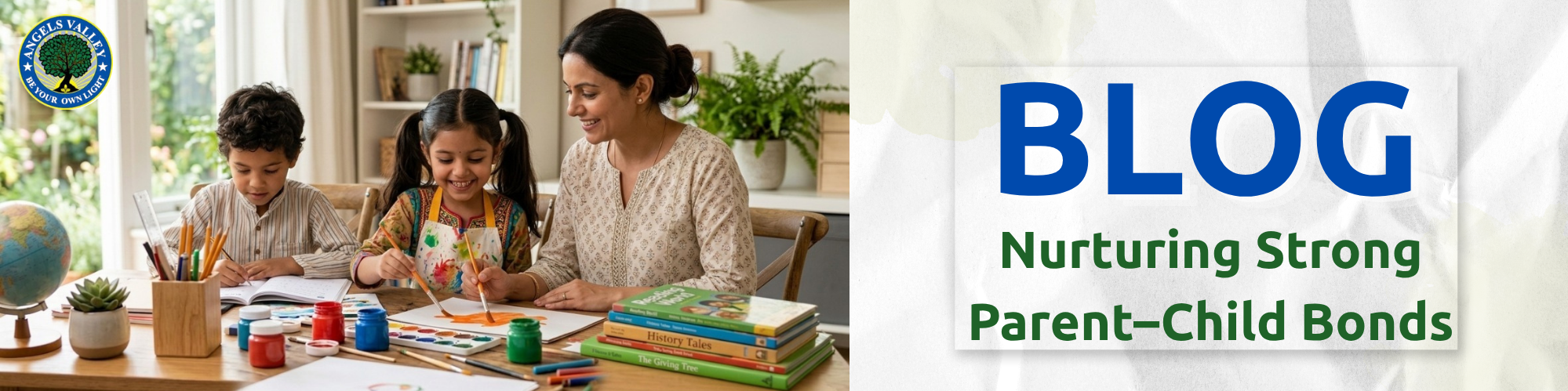
A Message from the Vice-Principal
At Angels Valley School, we believe that holistic child development, emotional well-being, and strong family bonds are the foundation of a child’s success—both academically and in life. In today’s digital age, where screen time often replaces quality time, it becomes even more important for parents to consciously build meaningful connections with their children.
Research in child psychology and brain development shows that simple, everyday interactions between parents and children play a powerful role in strengthening their emotional bond. These shared moments—often small and routine—can trigger the release of important “feel-good” hormones such as serotonin, dopamine, oxytocin, and endorphins.
What we often don’t realize, however, is the profound physiological impact these bonding activities have on both the child and the parent. These are not just emotional experiences—they are biological events that actively shape our brain chemistry, emotional regulation, and overall well-being.
With this in mind, we’ve outlined some common bonding activities and the key hormones they stimulate in our bodies, helping us better understand how meaningful connection supports both mental and physical health.
Here are some thoughtful, practical, and engaging activities that families can incorporate into their daily routines:
1. Nature Walks: Promoting Emotional Well-being and Mindfulness
Spending 20–30 minutes walking together in natural surroundings—parks, gardens, or even quiet neighbourhood spaces—can greatly enhance mental health and emotional bonding.
Hormonal Benefits:
• Serotonin release improves mood and emotional balance
• Endorphins help reduce stress and anxiety
Developmental Benefits:
• Encourages mindfulness in children
• Creates space for open communication
• Reduces behavioural stress and restlessness
A simple daily walk can become a powerful ritual of connection.
2. Building a Home Library: Fostering a Love for Reading
Creating a home library for children is one of the most impactful ways to nurture reading habits, language development, and imagination.
How Parents Can Begin:
• Collect age-appropriate books
• Explore pre-loved books, book fairs, and exhibitions
• Involve children in selecting and organising books
Hormonal Benefits:
• Oxytocin strengthens bonding during shared reading
• Dopamine enhances learning and curiosity
Educational Benefits:
• Promotes literacy skills and vocabulary development
• Builds focus, comprehension, and critical thinking
• Encourages independent reading habits
When parents and children read together, they don’t just build knowledge—they build memories.
3. Creative Activities: Encouraging Expression and Connection
Engaging in creative learning activities such as art, craft, pottery, and DIY projects allows children to express themselves freely while strengthening family bonds.
Examples:
• Pottery and clay modelling
• Painting and drawing
• Simple DIY crafts at home
Hormonal Benefits:
• Dopamine boosts motivation and enjoyment
• Endorphins reduce stress
Developmental Benefits:
• Enhances creativity and problem-solving skills
• Builds patience and concentration
• Strengthens emotional connection through shared experience
4. Fun and Recreational Activities: Building Joyful Memories
Activities like go-karting, outdoor games, and family outings provide excitement and shared joy, which are essential for a strong parent–child relationship.
Hormonal Benefits:
• Adrenaline adds excitement and engagement
• Dopamine reinforces positive experiences
Benefits:
• Strengthens family bonding
• Builds trust and companionship
• Creates lasting childhood memories
5. The Importance of Low-Stimulation Activities in Child Development
In contrast to high screen exposure, low-stimulation activities for children are essential for nurturing calmness, focus, and emotional security.
What Are Low-Stimulation Activities?
Activities that are quiet, slow-paced, and free from excessive digital or sensory input.
Examples:
• Reading together
• Quiet storytelling sessions
• Puzzles and colouring
• Sitting together in a calm outdoor space
Hormonal Impact:
• Promotes serotonin release for emotional stability
• Helps reduce cortisol (stress hormone)
Benefits:
• Improves attention span and concentration
• Supports emotional regulation in children
• Encourages meaningful parent–child conversations
In stillness, children often feel the most connected.
Strong relationships are not built through grand gestures, but through consistent, meaningful interactions. As parents, your presence, patience, and participation play a crucial role in shaping your child’s emotional and social development.
At our school, we strongly encourage families to prioritise quality time, reading culture, creative engagement, and mindful parenting practices. Together, let us create an environment where children feel secure, valued, and inspired to grow.
Warm regards,
Shreya Mehta
Vice-Principal